5 Things to Know About the New Rare Armor Set in Rust
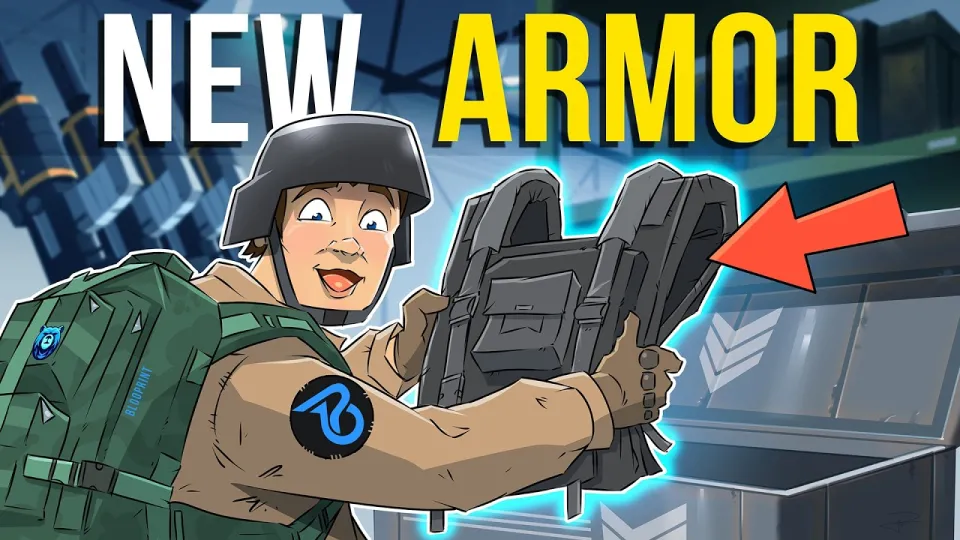
Video: This NEW RARE ARMOR SET is OP in Rust (Duo Survival)
Need articles like this for your video? They help promote it on YouTube and Google — order them in the Telegram bot @sat_sit_bot. The bot writes and publishes the articles itself (with your YouTube video embedded) on popular topical websites (no ads). Try it free: 50 articles on us.
Key takeaways
- The new rare armor set in Rust functions as heavy protection that trades mobility for survivability in close-range fights.
- Blooprint's Bunker features the set in a duo survival run with streamer Ledoo on Twitch.
- The armor is described in the video as turning a player into a "Juggernaut" in PvP.
- Kevlar-tier armor is loot-driven in Rust, so acquiring the set depends on monuments, crates and raid outcomes rather than crafting alone.
- Grenades and utility play a bigger role against armored opponents, a point viewers repeatedly raised about the footage.
The new rare armor set in Rust is a high-protection gear tier that turns a player into a walking tank, trading movement speed and flexibility for raw damage resistance in close-range fights. It is not a craftable starter kit: you get it from loot, monuments and contested crates, which is why seeing it in a duo survival run matters. The set is the centerpiece of Blooprint's Bunker's duo video with Ledoo's Twitch channel, where the armor is used to push fights that would normally be suicidal.
What the new rare armor set actually does in Rust
The armor's job is to absorb punishment that would kill a player in standard gear, letting them hold angles and win trades. In practice, the set behaves like the classic heavy-plate fantasy: you survive more bullets, you win more point-blank exchanges, and you become the person the enemy team has to coordinate around. The trade-off is the same one Rust has always enforced with heavy armor — you are slower, louder in a fight, and easier to track once you commit to a push.
Key properties to plan around:
- Damage reduction is the headline: the set is built to eat rifle and shotgun hits that would otherwise end a fight instantly.
- Mobility suffers, so rotations across open ground and roof-to-roof jumps become risky.
- Repair and durability costs are real; a heavy set that soaks damage will need maintenance between fights.
- Visibility works against you — a bulky silhouette is easy to spot at range, which is why armored pushes usually happen at night or indoors.
The video's framing says it plainly: the armor turns you into a Juggernaut. That is the correct mental model. You are not a flanker in this gear; you are the person who walks through the door first.
Where to find kevlar-tier armor in Rust
Kevlar-class armor in Rust is loot-driven, so the set comes from the same sources as other high-tier gear rather than from a workbench recipe. The reliable routes are:
- Monument crates and elite crates at high-tier monuments, especially those requiring keycards or radiation protection.
- Bradley APC and attack helicopter loot, which remain among the most consistent sources of top-tier armor.
- Oil rig and cargo ship crates, where the loot table skews toward military-grade gear.
- Player loot — raiding a group that already owns the set is often the fastest way to get one.
- Events and airdrops, which can drop high-tier armor pieces depending on the server's loot configuration.
Because the set is rare, the practical question is not "where is it" but "who has it." On a busy server, tracking armored players and hitting their base is a legitimate acquisition strategy, and it is exactly the kind of snowball the duo run in the video is built on.
How the armor changes duo fights
In a duo, one armored player changes the entire shape of an engagement. The armored partner becomes the breach tool: they take the first shot, absorb the opening burst, and create the half-second the second player needs to swing the fight. The unarmored partner stays mobile, holds the flank, and punishes anyone who tries to reposition around the tank.
A workable duo pattern with the set:
- Armored player leads through the door or around the corner and eats the first contact.
- Second player holds a wider angle and trades on the reload.
- Grenades go in first when defenders are wall-spamming or holding a tight room.
- The armored player never chases; they anchor, and the mobile partner cleans up runners.
The footage leans heavily on utility, and that is not an accident. Against a heavily armored opponent, explosives and fire do work that bullets struggle to finish, and coordinated grenade use is what separates a clean push from a trade-fest.
Typical questions and doubts from viewers
Viewers watching armored gameplay tend to raise the same practical concerns, and they are worth answering directly. The first is whether the set is genuinely strong or just looks strong on camera: it is strong in the specific situations it is designed for — indoor fights, door holds, and short-range trades — and mediocre in open-field rotations where speed decides who lives. The second is cost. A rare set that you lose on death is a gamble, and losing it to a lucky shotgun or a grenade is the expected outcome eventually, not a tragedy.
The third recurring doubt is about the duo dynamic itself. Long-time fans of Blooprint's content compare partners constantly, and the honest answer is that the armored role is a support role: the person in the set is not the highlight reel, they are the reason the highlight reel exists. The fourth is utility. Players who come from other shooters notice how rarely grenades get used in Rust fights, and armored opponents are precisely the reason to change that habit.
Risks, counters and when to leave the set at home
Heavy armor is a liability in the wrong context, and knowing when to bank it is as important as knowing how to use it. Skip the set when you are farming, when you are moving across open terrain in daylight, or when you are scouting a raid you have not yet committed to. Wear it when the fight is close, when the angle is short, and when the enemy has already committed to a push.
Counters to keep in mind if you are on the receiving end:
- Shotguns at point-blank range still punish armored players who over-commit.
- Grenades, Molotovs and rockets bypass the armor conversation entirely.
- Headshots remain the efficient answer; armor coverage is not uniform.
- Distance and information beat armor — spotting the set early lets you avoid the fight or set the terms.
All links from the video
Final takeaway
The new rare armor set is a situational powerhouse in Rust: dominant in close-range, coordinated pushes and a liability in open movement and solo farming. The Blooprint's Bunker breakdown shows the set doing exactly what it is designed to do in a duo survival run, with a partner who plays the mobile half of the equation well. If you want to see the fights live rather than in an edit, follow Ledoo's stream on Twitch and watch how the armored role is played in real time. Treat the set as a tool you deploy, not a permanent outfit, and it will pay for itself.
Questions & answers
Is the new rare armor set in Rust worth using in every fight?
No. It shines in close-range, indoor and door-holding fights where damage absorption decides the trade. In open-field rotations, farming runs and scouting, the mobility penalty makes it a liability, so most experienced players bank it and wear it only when they expect contact.
How do you actually get the rare armor set?
It comes from high-tier loot rather than crafting: elite and military crates at high-tier monuments, Bradley APC and helicopter loot, oil rig and cargo ship crates, airdrops and events. Raiding a group that already owns a set is often the fastest route on a populated server.
What counters a player wearing the armor?
Shotguns at point-blank range, explosives such as grenades and rockets, fire, and accurate headshots. Information matters more than gear: spotting the armored player early lets you avoid the fight or choose the range where the armor's advantages disappear.
Why do armored players rely so much on grenades?
Because bullets are inefficient against heavy protection. Grenades and fire force movement and deal damage that armor does not fully absorb, which is why coordinated utility use is standard in pushes against armored defenders holding tight rooms.
Source: This NEW RARE ARMOR SET is OP in Rust (Duo Survival) · Markdown version